.svg)
You've been here before: the partner who figured it out after you paid The demo was sharp. The...
How to Evaluate an Implementation Partner Before You Sign Anything
You already know you need a better system. The question is who to trust to build it.
You've seen the demos. You've had the discovery calls. Every implementation partner sounds confident, uses the same buzzwords, and has a deck with logos of companies you recognize. None of that tells you whether they'll actually deliver what they're describing.
The problem isn't finding someone who says they can do it. The problem is figuring out who will show you exactly how it's going to work before you commit to anything — and who is planning to figure that out after you sign.
The question that separates the two types of partners
Ask this early: Can I see how my operation is going to look inside the system before the project starts?
A partner who has done this before — for a business like yours, not generically — can show you. Not a wireframe. Not a slide. An actual working model, or a detailed blueprint that maps your specific processes to the system before implementation begins.
If the answer is "we'll define that during the engagement," what they're telling you is that your implementation budget is funding their learning process. That's not a partnership. That's outsourced trial and error.
What you should be able to see before you pay
For a company that sells services or projects, a trustworthy implementation partner should be able to show you — in concrete terms, not abstractions — how your operation maps to the system. That means:
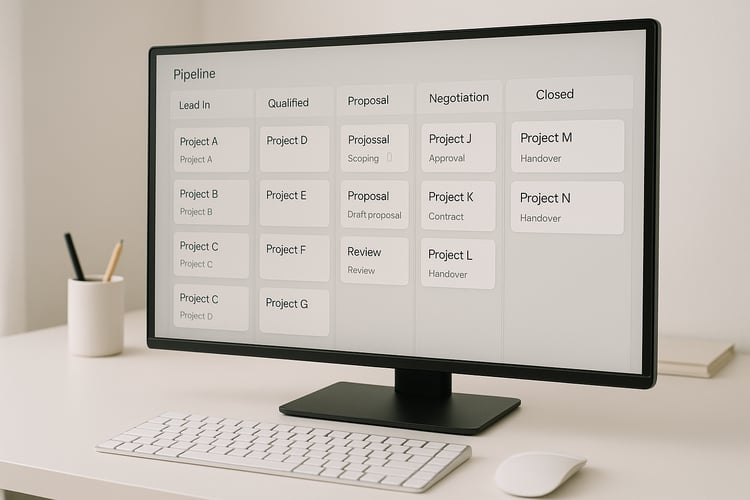
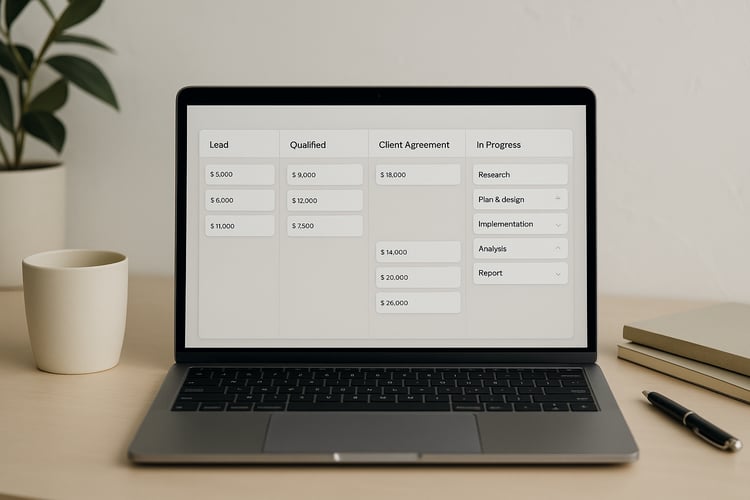
How your sales pipeline stages reflect the actual steps your team takes, from first conversation to signed contract. How the handoff from sales to operations is handled so that what was promised in the proposal is visible to whoever executes it. How project status, costs, and milestones connect back to the deal, so your team isn't making phone calls to get information that should already be in the system. How your existing tools — your project management software, your billing system, whatever you're already using — connect to the new CRM without creating a new data silo.
If a partner can't walk you through that picture clearly before you sign, they don't have it yet. You'd be buying a promise, not a product.
The documentation test
Before any implementation starts, ask for a written blueprint of what's going to be built. Not a scope of work with bullet points. A document that maps your processes to specific objects, pipelines, and automations in the system.
This document does two things. First, it tells you whether the partner has actually thought through your specific operation — not a template of what usually works. Second, it becomes the contract for delivery. When the implementation is done, you can check what was built against what was agreed. There's no ambiguity about whether you got what you paid for.
Partners who resist this — who say it slows things down or that the details get defined during implementation — are protecting their flexibility to change scope. That flexibility costs you time, budget, and usually a system that works differently than you expected.
What the first conversation should tell you
A first call with a trustworthy partner should feel different from a sales conversation. They should be asking specific questions about how your operation actually works right now: how your team hands off work between departments, where information currently lives, what breaks down when a project goes over budget or behind schedule.
If the first conversation is mostly about their capabilities and their process, pay attention. The partner who starts by listening to your operation is designing for your business. The partner who starts by presenting their methodology is designing for their process.
You want someone who will tell you no when something doesn't make sense. That's harder to evaluate before you hire someone, but you can test it: describe a requirement that's slightly off — something that sounds reasonable but isn't the right solution. A partner with real expertise will push back and explain why. A partner who wants the contract will agree and figure it out later.
The references question most people ask wrong
Asking for references is standard. But the question most people ask — "can your previous clients speak to the quality of your work?" — gets you a curated list of satisfied customers. That's not the signal you need.
Ask instead: Do you have clients in a similar business to mine, and can I see specifically what was built for them?
Not a testimonial. The actual system, or a detailed walkthrough of what was implemented and why. If a partner has done this for a company that sells services or projects — where the deal doesn't end at the signature, where operations has to execute what sales promised — they should be able to show you what that looks like. If every example they have is from product companies or retail, their mental model isn't built for your context.
The speed question
Ask how long the implementation will take and, specifically, what you and your team need to do during that time.
A long implementation timeline isn't always a red flag — complex integrations take time. But an implementation that requires months of weekly workshops, frequent alignment meetings, and your team doing significant configuration work is a sign that the partner is building while they go. The mapping and design work should happen before implementation starts. Once it does, your involvement should be review and approval — not co-building.
The partners who move fastest aren't cutting corners. They're moving fast because they figured out what was being built before they started building it.
What a trustworthy answer looks like
The clearest signal that a partner can deliver is that their proposal shows you exactly what you're buying. Not a list of services. The actual model of how your operation will work — which stages exist in your pipeline, how your projects connect to your deals, what your team sees when they open a record, what happens automatically when a milestone is reached.
When you finish reading that proposal, you should be able to explain to someone else how your system is going to work. If you can't, the proposal isn't specific enough — and the implementation won't be either.
That's the standard to hold every partner to. Not their certifications, not their client logos, not how confident they sounded on the call.
What the blueprint described above actually looks like
The page below shows a concrete example: pipeline stages mapped to a services company's actual sales process, the handoff model from sales to operations, project tracking connected to deals, and financial visibility without leaving the CRM. If you're building your evaluation checklist right now, it's a useful reference for what a specific proposal should include — and what to ask when it doesn't.
See the implementation model for companies that sell projects →