.svg)
The deal closed. Operations found out on a group chat. Your sales rep closed a project. A real one...
Your HubSpot Works. Your Operation Still Doesn't. Here's Why.
You bought HubSpot. You bought Asana or Monday. Your team logs in every day. And your operation still runs on Slack threads and gut feel.
Here's what your Monday morning actually looks like.
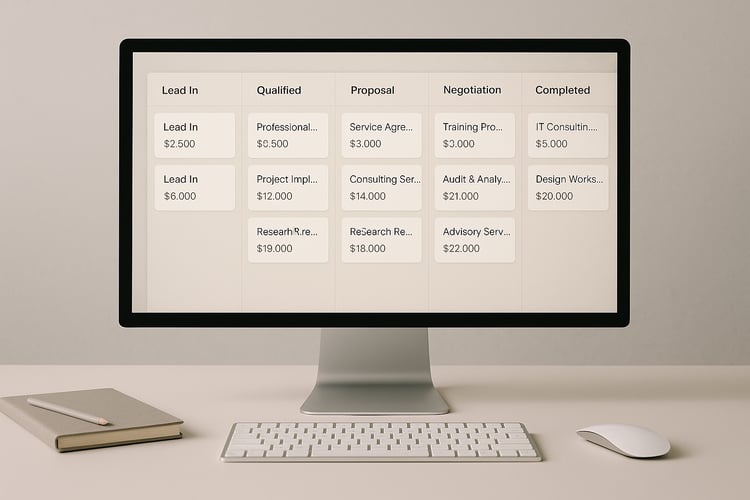
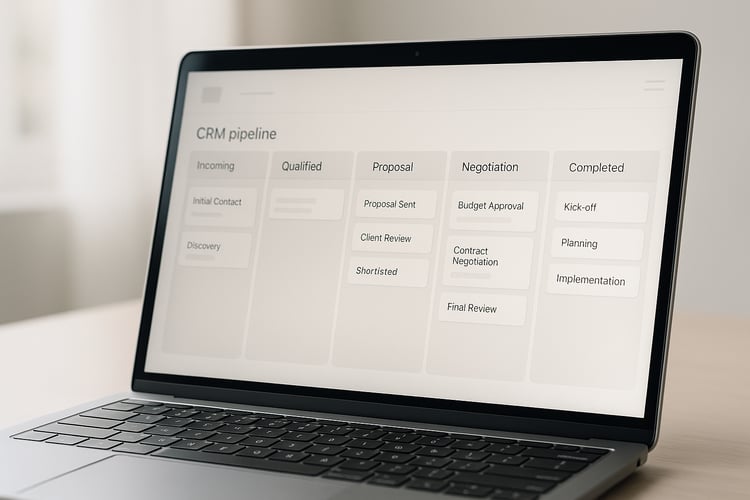
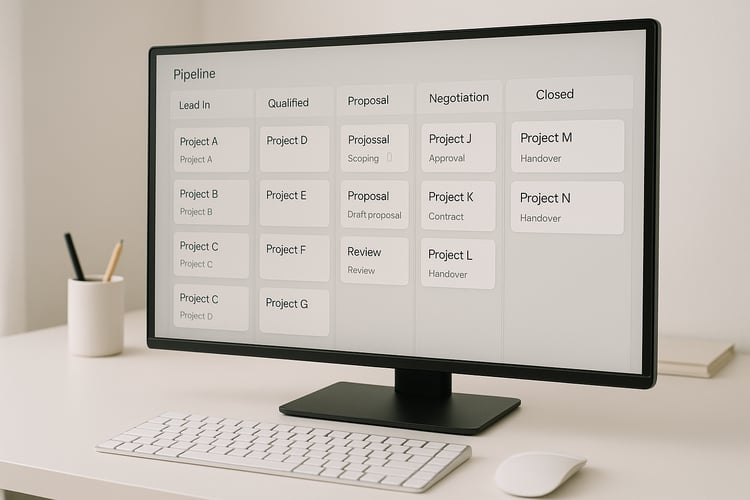
Your sales director opens HubSpot to check the pipeline. The deals are there. Stages updated. Notes from last week's calls.
Then your operations lead opens Asana. Tasks assigned. Projects in flight. Status colors green and yellow.
Both tools work. Both teams use them. And neither of you can answer a simple question without a meeting: How is the project we closed last month actually going?
The problem isn't the tools. It's that they describe two different companies.
HubSpot describes a company that sells. Stages, deals, contacts, pipeline value. Clean. Linear. Built around the moment a prospect becomes a customer.
Asana describes a company that delivers. Tasks, owners, deadlines, blockers. Also clean. But built around a different unit: the project, not the deal.
The handoff between them is a human. Someone copies information from one system to the other. Or holds a meeting. Or sends an email titled "Kickoff – ACME Corp." That human is the integration. And humans break.
This is why your sales team doesn't know if a client is happy three months after closing. This is why operations finds out about scope changes from a forwarded email. This is why finance is still in Excel — because neither system holds the financial truth of a project that's half-sold, half-delivered.
You don't have a tool problem. You have an architecture problem.
Generic HubSpot setups are designed for companies that sell a product. Lead comes in, deal moves through stages, deal closes, deal disappears from the pipeline. Marketing keeps generating leads. Sales keeps closing them. That's the loop.
That loop doesn't exist in your business.
In a professional services company — IT consulting, architecture, legal, recruiting, agencies, any business where what you sell doesn't exist until you build it — the deal doesn't end when the contract is signed. The deal begins. What was pre-sales becomes execution. The salesperson who closed it still gets the call when something goes wrong. The client still thinks of it as one relationship, not two.
A generic HubSpot setup pretends this transition is clean. It isn't. So your team built workarounds: separate tools, separate meetings, separate spreadsheets. And now you're paying for software that, combined, costs more than what a properly architected system would — and still doesn't give you visibility.
The convention is to add another tool. That's the wrong move.
When the gap shows up, the instinct is to plug it. PM tool for operations. Time tracking tool because PM doesn't have it. Profitability dashboard because time tracking doesn't connect to revenue. Slack channel because nothing talks to anything. Zapier in the middle to glue it together.
Each addition makes sense individually. Together, they make your operation more fragile, not less. Every integration is a potential break point. Every tool is a separate source of truth. Every team ends up loyal to the tool they use most — and skeptical of the data coming from the others.
The real problem isn't that you're missing a tool. It's that nobody designed your operation as one system. They configured tools and hoped the seams would hold.
What it looks like when it's actually built right.
A correctly architected HubSpot for a professional services company has a deal that doesn't disappear at close. It moves into in-progress. The salesperson can open that deal six weeks later and see: current project status, critical incidents, fees billed, fees outstanding — without asking operations a single question.
Operations doesn't work in a separate tool. They work in tickets inside the same system, where each ticket is a unit of work — pre-sales scoping, design, build, QA, delivery — with its own pipeline and its own KPIs. The ticket lives under the deal. The deal lives under the company. The financial reality of the project rolls up automatically.
This isn't a feature. It's a data model. Contacts, companies, deals, tickets, projects, invoices — all linked, all visible, all built around how a services company actually operates instead of how a product company operates.
When you have this, the handoff meeting still happens — but it's a five-minute alignment, not a ninety-minute briefing. The information transfer happened in the system. The meeting is for the humans.
What to do about it.
Don't add another tool. Audit the architecture first.
Open your current HubSpot. Pick three closed deals from the last quarter. For each one, try to answer in under sixty seconds, without asking anyone: What was delivered? Who's the project owner? What's the current margin? Is the client satisfied?
If you can't answer those questions from inside HubSpot, you don't have a HubSpot problem. You have a model problem. The objects, the pipelines, the connections between sales and delivery — none of it was designed for what you actually do.
The fix isn't more configuration. It's redesigning the object model so HubSpot reflects your operation: deals that survive the close, tickets that hold the operational work, projects that hold the execution, invoices that give you real-time financial visibility. Done right, this also means everything you're paying for in separate tools collapses back into one place — including the cost.
The companies that do this now build the data foundation that makes everything else possible later: real reporting, real forecasting, and eventually AI agents that can actually help because the data underneath them is structured. The ones that don't keep adding tools, keep holding meetings, keep finding out about problems too late.
The next step.
If this describes your operation — tools that work individually, a business that doesn't run as one system, and a creeping sense that you're paying for software that's supposed to solve this — the next thing to look at isn't another product page full of features. It's a model of how your operation should actually be structured.
We built one specifically for companies that sell projects. You can see exactly how the objects connect, how sales and operations share the same source of truth, and what the implementation actually delivers — before any conversation. See the model here.